Dear Parishioner,
As Lent begins, the readings this Sunday take us to two different settings: a vibrant garden and a dry desert. In Genesis, we are taken to the Garden of Eden, where Adam and Eve live in a world of abundance. Everything they need has been given to them. They walk with God and lack nothing. Yet into this setting which is full of trust comes a question from the serpent: “Did God actually say…?”
It is a small question, but a powerful one. It introduces doubt where there had been confidence, and suspicion where there had been trust. God’s command begins to look less like loving guidance and more like an unnecessary restriction. The suggestion is planted that God might be holding something back, and that real freedom lies in taking control for themselves.
It is not hard to recognise this pattern in our own lives. We, too, can be tempted to think that God’s way is too demanding, too slow, or too unrealistic. We can begin to wonder whether we know better, that we really understand what will bring us happiness or security. The story of Eden reminds us that the real damage done by sin is not just the breaking of a rule, but the breaking of a relationship. Trust is weakened, fear enters in, and harmony is lost.
The Gospel leads us into a very different place: the desert. Jesus has just been baptised and has heard the Father call him “my beloved Son”. Immediately afterwards, the Spirit leads him into the wilderness.
Unlike Adam and Eve, Jesus is not surrounded by plenty. Weak with hunger and alone in the desert, Jesus is tempted by the devil, to rely on himself rather than on the Father, to satisfy his hunger, to force God to act, and to take power without the cost of obedience. All of them promise a quicker and easier way. What is striking is how Jesus responds. He does not argue, he simply replies to each of the three temptations:
- “Man shall not live by bread alone.”
- “You shall not put the Lord your God to the test.”
- “You shall worship the Lord your God, and him only shall you serve.”
Where Adam and Eve reached out to take what was not theirs to take, Jesus places himself in the Father’s hands. Where doubt entered in, Jesus remains rooted in trust. Where humanity once gave way under temptation, Jesus remains faithful.
This is why Lent is such an important season. It is not simply about giving things up, but about learning again whom we trust. The small struggles and choices of daily life often raise the same quiet questions: Will I rely only on myself, or will I leave room for God? Will I choose what is easiest, or what is faithful?
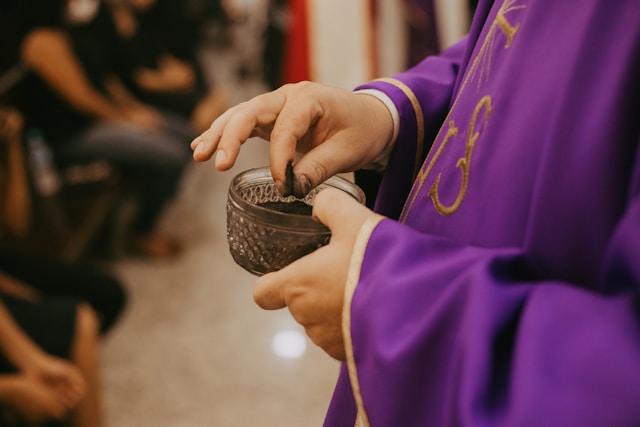
The Church offers us prayer, fasting and almsgiving as simple tools to help us grow in trust. Prayer teaches us to listen instead of rushing ahead. Fasting helps us rediscover what truly sustains us. Almsgiving draws us out of ourselves and turns us back towards others.
Lent is a season of beginning again, trusting that God remains faithful even when we are not. The desert, in the end, is not meant to defeat us, but to change us, to become a place where trust is rebuilt and hearts are renewed.
As we begin these forty days, perhaps we might choose one small, practical way to place our trust in God a little more deliberately and take that step with quiet confidence.
Yours in Christ,
Deacon Ian